Showing posts with label digital. Show all posts

Sunday, May 1, 2011

Little Knowledge

0 comments
In 1888, George Eastman began promoting the first hand-held Kodak
camera with the slogan, “You press the button, we do the rest.” His idea
was to make the film camera as convenient as the pencil. However, the film
king’s dream didn’t really come true until the invention of the digital
camera.
Certainly, conventional photography has long been as
simple as pressing a button, but the “we do the rest”
part — taking the film to a photo lab, deciding what
size and kind of prints to make, and then waiting for
the results — is a lot less convenient than using a
pencil.
Digital photography has finally put the entire
process of making pictures in the hands of the
person holding the camera. You press the button,
and you can do as much of the rest yourself as
you’re comfortable with. If all you want to do is point
and shoot, you can do that. If you want to get more
involved in the picture-taking and picture-making process,
digital photography gives you the tools for that, too.
You compose the picture through the viewfinder (as always), but now, you
can preview the exact photograph that you’re going to take on a bright LCD
(liquid crystal display) screen on the back of your camera. After snapping a
shot, you can instantly review the photos you’ve taken and erase the bad
pictures on the spot or “mark” the ones you want to print.
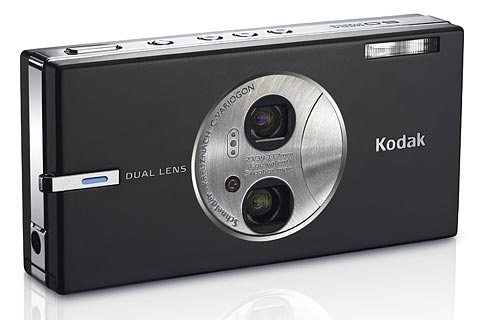
You don’t need to remember to stop and buy film. Your digital film is almost
infinitely reusable. You don’t have to drop off your digital film for finishing:
It’s “processed” instantly and ready for viewing or printing using your own
inexpensive color printer. No more sifting through stacks of prints of marginal
images. You decide which images to print and whether to make them
4 x 6 inches or 5 x 7 inches or some other size. You can print them at home
inexpensively or take a tiny digital memory card to a nearby retailer and
have even more inexpensive prints made for you in minutes by an in-store
digital print lab.
On the other hand, if you want to have full control over your photos, digital
photography gives you that, too, to a degree that has never before been
possible. Perhaps your images aren’t exactly right or could benefit from a
little cropping or other improvements. You can fix bad color, remove your
ex-brother-in-law from a family photo, or adjust the borders of an image to
focus on the most interesting subject matter. All you need is an image editor,
such as Photoshop or Photoshop Elements.


Article By Digital Photography for Dummies book
Click here to Read more...

Monday, April 11, 2011

dSLR: dNext Great Digital Camera

0 comments
Surprise! Digital SLRs are now available in virtually every price range. As
recently as 2003 (the Dark Ages of digital photography), a basic entry-level
dSLR could cost $2,000 or more. At that time, the original Canon Digital Rebel
and Nikon D70 models made it possible for serious photographers to purchase
a real dSLR — with lens — for less than $1,000. A few years later, you
could get similar kits — but with more resolution and improved features —
for $599 or less. Today, you’d have difficulty finding a dSLR that doesn’t have
at least 12 million pixels of image-grabbing sharpness.

So, almost anyone can afford to make the jump to a digital SLR. If you already
have, you’ve discovered that the dSLR lets you take pictures the way they’re
meant to be taken. After they use other film or digital cameras, avid photographers
interested in taking professional-looking photos notice why dSLRs
stand out:

1. You can view a big, bright image that represents (almost) exactly what
you see in the final picture. No peering through a tiny window at a miniature
version of your subject with a tiny optical viewfinder. Digital SLRs
have big and bright viewfinders that show virtually the entire image, so
you don’t have to wonder whether you chopped off the top of someone’s
head. Using the optical viewfinder, which comes as standard equipment on
every dSLR, means that you don’t have to squint to compose your image at
arm’s length on an LCD (liquid crystal display) viewfinder that washes out
in bright sunlight. However, if lighting conditions permit, most digital SLRs
also allow you to preview your picture on the back-panel LCD (just like a
point-and-shoot camera), giving you the best of both viewing worlds.

2. A dSLR responds to an itchy trigger finger almost instantly. Forget
about pressing the shutter release and then waiting a second or two
before the camera decides to snap the shot. Although newer point-andshoot
cameras are more responsive than older versions, few match the
ability of dSLRs to crank out shots as fast as you can press the button.
Even fewer point-and-shoot cameras are capable of the four-to-nineframes-
per-second continuous shooting rates available with some of the
digital SLRs aimed at more advanced photographers.

3. You have the freedom to switch among lenses. For instance, you can
switch among an all-purpose zoom lens, a super-wide-angle lens, an
extra-long telephoto lens, a close-up lens, or other specialized optics
quicker than you can say 170-500mm F/5-6.3 APO Aspherical AutoFocus
Telephoto Zoomexpialidocious. (Best of all, you don’t even have to know
what that tongue-twister of a name means!)
Just be prepared to succumb to lens lust, a strange malady that strikes
all owners of dSLRs sooner or later. Before you know it, you find yourself
convinced that you must have optical goodiesfor taking photos of wildlife
from enough of a distance to
avoid scaring away the timid
creatures. If you’re ready to say sayonara to film, adiós to poorly exposed and poorly composed pictures, and auf Wiedersehen to cameras that have sluggardly performance, it’s time to get started.The sections that follow (as well as other chapters in this part) introduce you to the technical advantages of the digital SLR and how you can use the dSLR features to their fullest. When you’re ready to expand your photographic horizons even further,

 Article From : Digital SLR Cameras and Photography For Dummies 3rd Ed. (Book)
Click here to Read more...