Showing posts with label slr. Show all posts

Sunday, May 1, 2011

Little Knowledge

0 comments
In 1888, George Eastman began promoting the first hand-held Kodak
camera with the slogan, “You press the button, we do the rest.” His idea
was to make the film camera as convenient as the pencil. However, the film
king’s dream didn’t really come true until the invention of the digital
camera.
Certainly, conventional photography has long been as
simple as pressing a button, but the “we do the rest”
part — taking the film to a photo lab, deciding what
size and kind of prints to make, and then waiting for
the results — is a lot less convenient than using a
pencil.
Digital photography has finally put the entire
process of making pictures in the hands of the
person holding the camera. You press the button,
and you can do as much of the rest yourself as
you’re comfortable with. If all you want to do is point
and shoot, you can do that. If you want to get more
involved in the picture-taking and picture-making process,
digital photography gives you the tools for that, too.
You compose the picture through the viewfinder (as always), but now, you
can preview the exact photograph that you’re going to take on a bright LCD
(liquid crystal display) screen on the back of your camera. After snapping a
shot, you can instantly review the photos you’ve taken and erase the bad
pictures on the spot or “mark” the ones you want to print.
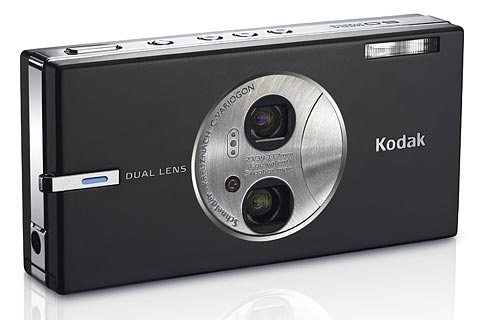
You don’t need to remember to stop and buy film. Your digital film is almost
infinitely reusable. You don’t have to drop off your digital film for finishing:
It’s “processed” instantly and ready for viewing or printing using your own
inexpensive color printer. No more sifting through stacks of prints of marginal
images. You decide which images to print and whether to make them
4 x 6 inches or 5 x 7 inches or some other size. You can print them at home
inexpensively or take a tiny digital memory card to a nearby retailer and
have even more inexpensive prints made for you in minutes by an in-store
digital print lab.
On the other hand, if you want to have full control over your photos, digital
photography gives you that, too, to a degree that has never before been
possible. Perhaps your images aren’t exactly right or could benefit from a
little cropping or other improvements. You can fix bad color, remove your
ex-brother-in-law from a family photo, or adjust the borders of an image to
focus on the most interesting subject matter. All you need is an image editor,
such as Photoshop or Photoshop Elements.


Article By Digital Photography for Dummies book
Click here to Read more...

Sunday, April 17, 2011

Flexing the powerful sensor of the dSLR Camera

1 comments
Flexing the powerful sensor of the  dSLR Camera
With very few exceptions, digital SLR sensors are much bigger than their
point-and-shoot camera counterparts, and this size gives them a larger area
that can capture light and, potentially, great sensitivity to lower light levels.
(Some non-SLR cameras give up compactness to provide somewhat larger
sensors, but they’re still fairly rare.)

A dSLR’s extra sensitivity pays off when you want to
1. Take pictures in dim light.
2. Freeze action by using shorter exposure times.
3. Use smaller lens openings to increase the amount of subject matter
that’s in sharp focus.

Within the Canon digital camera
line alone, you find digital SLRs that
have 22.2mm-x-14.8mm to 24mm-x-
36mm sensors (the size of a 35mm
film frame). By comparison, some
of Canon’s digital point-and-shoot
cameras use a sensor that measures
only 7.8mm x 5.32mm. Put in terms
that make sense to human beings,
the dSLR sensors have 8 to 20 times
more area than their Lilliputian
point-and-shoot sensor-mates.

If you think of a sensor as a rectangular
bucket and the light falling on
it as a soft drizzle of rain, the large
buckets (or sensors) can collect more drops (or the particles of light called photons) more quickly than the small ones. Because a certain minimum
number of photons is required to register a picture, a large sensor can collect
the required amount more quickly, making it more sensitive than a smaller
sensor under the same conditions.
In photography, the sensitivity to light is measured by using a yardstick
called ISO (International Organization for Standardization). Most point-andshoot
digital cameras have a sensitivity range of about ISO 50 to ISO 100 (at
the low end), up to a maximum of ISO 800 to ISO 3200 (at the high end). Some
point-and-shoot models have even higher sensitivity settings, but it remains
to be seen how useful these ultra-high ISO non-SLR models are. Indeed, many
models that have high ISO settings generally don’t do a very good job in
terms of image quality.
In contrast, digital SLRs — which have more sensitive sensors and larger
light-gathering pixels — commonly have usable ISO settings of up to at least
ISO 1600. Many are capable of ISO 3200 or may range up to a lofty ISO 25600!
This extra speed does have a downside, as you can see in the following section.
But, in general, the added sensitivity allows people to shoot photos in dim
light, take action pictures, or stretch the amount of depth-of-field available.
Reducing noise in your photos
Visual noise (or just noise) is that grainy look that digital photos sometimes
get, usually noticeable as multi-colored speckles most visible in the dark or
shadow areas of an image. Although you can sometimes use noise as a creative
effect, it generally destroys detail in your image and might limit how
much you can enlarge a photo before the graininess becomes obtrusive.
The most common types of noise are produced at higher sensitivity settings.
Cameras achieve the loftier ISO numbers by amplifying the original electronic
signal, and any background noise present in the signal is multiplied along with
the image information.
Point-and-shoot digicams often don’t have ISO settings beyond ISO 1600
because the noise becomes excessive at higher ratings, sometimes even
worse than you see . However, you can
boost the information that the big dSLR sensors capture to high ISO settings
with relatively low overall noise. I’ve used digital SLRs that had less noise at
ISO 1600 than some poor-performing point-and-shoots displayed at ISO 400.
Obviously, the large sensors in dSLRs score a slam-dunk in the noise department
and make high ISO ratings feasible when you really, really need them.

Noise doesn’t always result simply from using high ISO settings: Long exposures
can cause another kind of noise. Although some techniques can reduce
the amount of noise present in a photo (as you can discover in Chapter 2), by
and large, digital SLR cameras are far superior to their non-SLR counterparts
when it comes to smooth, noise-free images.
Thanks to the disparity in size alone, all sensors of a particular resolution
are not created equal, and sensors that have fewer megapixels might actually
be superior to high-resolution pixel-grabbers. For example, most older
10-megapixel dSLRs produce superior results to some of the newest
12-megapixel non-SLR digicams. So, no matter how many megapixels a
point-and-shoot camera’s sensor can hoard, that sensor generally isn’t as big
as a dSLR’s. And when it comes to reducing noise, the size of the sensor is
one of the most important factors.


Article From : Digital SLR Cameras and Photography For Dummies 3rd Ed. (Book) Click here to Read more...

Saturday, April 16, 2011

Improving Your Photography with a dSLR

0 comments
The differences between digital SLRs and the camera that you used before you saw the (digital SLR) light depends on where you’re coming from. If your most recent camera was a point-and-shoot digital model, you know the advantages
of being able to review your photos on an LCD screen an instant after you
take them. And, if you’re serious about photography, you also understand the
benefits of fine-tuning your photos in an image editor. If you’re making a longdelayed
switch to a digital SLR from a film SLR, you’re likely a photo enthusiast
already and well aware that a single lens reflex offers you extra control over
framing, using focus creatively, and choosing lenses to produce the best perspective.
And, if you’re making the huge leap from a point-and-shoot non-SLR
film camera to a digital SLR, you’re in for some real revelations.
A digital SLR has (almost) all the good stuff available in a lesser digital
camera, with some significant advantages that enable you to take your photo
endeavors to a new, more glorious level of excellence. Certainly, you can
take close-ups or sports photos by using any good-quality film or digital
camera. Low-light photography, travel pictures, or portraits are all within the capabilities of any camera. But digital SLRs let you capture these kinds of
images more quickly, more flexibly, and with more creativity at your fingertips.
Best of all (at least, for Photoshop slaves), a digital SLR can solve problems
that previously required you to work long hours over a hot keyboard.
Despite the comparisons you can make to other cameras, a digital SLR isn’t
just a simple upgrade from a conventional film camera or another type of
digital camera. A dSLR is very different from a film SLR, even though some
vendors still offer film and dSLRs that look quite a bit alike and share similar
exposure metering, automatic focusing, and other electronics, as well as
interchangeable lenses. If you look closely, you can find that the digital SLR
camera is different than a film SLR, and you use it differently to take pictures.
In the sections that follow, I introduce you to the advanced features and
inner workings of a dSLR so that you can begin getting the most out of your
camera.

 Article From : Digital SLR Cameras and Photography For Dummies 3rd Ed. (Book)
Click here to Read more...