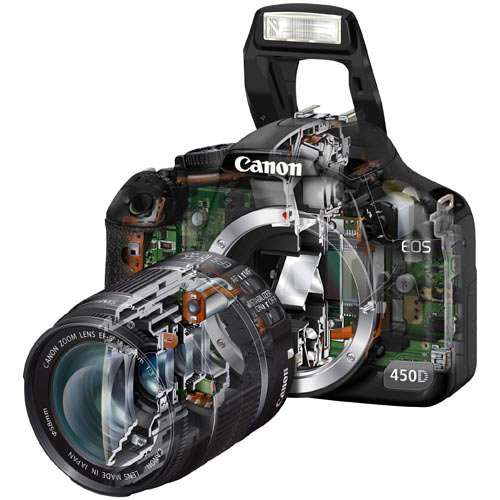
Showing posts with label dslr. Show all posts

Saturday, May 7, 2011

What Is The Best Digital Camera Brand?

0 comments
If ever there was a controversial question amongst the hordes of digital camera enthusiasts, it has to be "What is the best digital camera brand?". Sometimes referred to as "What is the best brand of digital camera to buy?", but not to be confused with "What is the best camera to buy?". Because everyone knows that regular (film) cameras are far superior to digital cameras. Hang on a sec, or was that the other way around? Who can keep track these days? Now before I digress too far from the topic, lets take a look at that age old battle, and see if we can determine which brand is best.
First things first, in the spirit of full disclosure, I need to declare that I do in fact own several cameras. They represent a variety of brands. I have two Canons, a Fuji, and a Kodak. I must confess, that I am somewhat partial to Canon, but I'll try not to let that cloud any editorial comments I may subsequently make.

If digital camera sales were any indication of what the best brand was, then according to Amazon.com Canon would be a clear winner. As I write this, Canon manufactures 18 of the top 25 bestselling cameras on their best seller list. In addition, Canon holds 9 of the top 10 spots, with the top 3 being the PowerShot A570 IS, the PowerShot SD1000 Digital Elph, and the PowerShot SD850. Sharing the top 11 spots with Canon are 2 of the Pure Video manufactured Flip Video cameras. Nikon has 2 cameras in the top 25 including the Nikon D40, and the Nikon D300. Panasonic sneaks in with a couple of their Lumix models, specifically the DMC-TZ3K and the DMC-TZ3A. And finishing in a strong 25th spot, that old stalwart Kodak with the Easyshare Z812IS.
Of course being popular, or the best seller does not the best brand make. It simply means you have the best salesmanship. In that world, Canon seems to be having the most success. How exactly would we determine the best brand? Best service, best design, best features, best customer support, best images, and best user experience are all valid traits. Perhaps a critical / scientific /empirical examination of all cameras models by manufacturer would be in order. Let's see if we can aggregate a lot of the work already done by a couple of camera review sites who take the above traits into consideration.
A perusal of one top camera review site under their 5 star category, show 39 Canon cameras, 18 Sony cameras, 17 Nikon cameras, 6 Fuji cameras, 5 Olympus cameras, 5 Panasonic cameras, 3 Pentax cameras, and 1 Konica camera. A second camera review site under their top 103 cameras showed 46 Canon cameras, 21 Sony cameras, 20 Nikon cameras, 5 Pentax cameras, 3 Fuji cameras, 2 Samsung cameras, 2 Panasonic cameras, 2 Kodak cameras, 1 Konica camera, and 1 Casio camera. If you total all that up, the top 3 end up being Canon with 85, Sony a distant second with 39, and Nikon a very close third with 37. Everyone else had less than 10 top rated cameras.

Article By Chris Campbell
Click here to Read more...

Wednesday, April 27, 2011

Megapixels and Why dSLRs Have More of Them

0 comments
Megapixels and Why dSLRs Have More of Them
If you’ve been working with digital images for a
while, you know that pixels are your pals. They’re
the basic building blocks that make up an image. The
term pixel is a portmanteau, which was Lewis Carroll’s
term for a new word created by combining two old
words, such as slimy and lithe to create slithy. In this case,
pixel stands for picture element and came into vogue when
computer imaging became popular.
However, you’ve seen pixel-like components outside the digital realm, in
pointillist paintings, such as the illustrations Georges Seurat created for the
Broadway musical Sunday in the Park with George. You also see pixel-like
components in newspaper halftone photos. All these images are made up of tiny dots that you can see vividly up close, but those dots blend to create
continuous tones and colors when you view them from a distance,The difference between these picture elements and those used to represent digital photos is that the digital pixels are all the same size
and shape, varying only in brightness and hue.
In digital images, the pixels — tiny squares that you can see individually only
under magnification — are arranged in rows and columns like a checkerboard
that happens to measure hundreds of squares on a side. Among current digital
SLRs, this array is a minimum of 3,008 pixels wide and 2,000 pixels tall,
for a total of 6 million pixels in all. (Although the last of these 6-megapixel
cameras will probably be phased out early in the life of this book.) The latest
digital SLR cameras for consumers actually offer many more pixels than that,
from 3,872 x 2,592 (10 million) pixels for certain entry-level models to 4,288
x 2,848 (12 million) pixels or more for the majority of digital SLRs. Of course,
pro and advanced amateur cameras go up to 6,048 x 4,032 (24.5 million)
pixels. That’s a lot of pixels! Those pixel counts represent the number of light-sensitive areas in the
digital camera’s sensor, and the total is usually expressed in terms of megapixels
(millions of pixels), and abbreviated MP. The precise dimensions
might vary, depending on the exact sensor used. For example, the Nikon D40
uses a 3,008-x-2,000-pixel sensor, but the original Canon Digital Rebel had a
3,072-x-2,048-pixel array. Both cameras were considered 6MP dSLRs, even
though the arrangement and number of pixels is slightly different.

Pixelementary, my dear Watson
Pixels, represented by individual
light-sensitive areas in a sensor
called photosites, capture the detail
in your image. In general terms,
the more megapixels, the better
because when you add pixels, the
ability of the sensor to capture detail
improves and the effective resolution
of the sensor rises.
It’s like dividing a foot-long ruler into
1,200 increments rather than 120.
In the former case, the ruler could
measure things with 1/100-of-an-inch
accuracy; in the latter, you could
use the rulings only in 1/10-of-an-inch
chunks. In the same vein, a sensor of
a particular size that has 12MP can
show much finer detail than one the
same size that has only 6MP. when
the size of the pixels decrease, more
of them can fit on a sensor to capture
ever smaller details of the original
image. However, image quality
involves more than resolution alone.
Many 10MP dSLRs produce sharper
and more noise-free results than
12MP non-dSLRs simply because the
10MP dSLR’s sensors are physically
larger and each individual pixel is
better than a non-dSLR’s sensor’s.
Some dSLRs even outperform other
dSLRs that have more resolution
because of the quality of the sensors,
lenses, or electronic circuitry in the outperforming dSLR. For example, I have a 12MP pro dSLR that consistently
produces better results than a 14MP entry-level model from another vendor,
particularly under lower light levels. The raw number of megapixels gives
you only a guideline, even though the more pixels, quite often the better your
images look.

Article From : Digital SLR Cameras and Photography For Dummies 3rd Ed. (Book)
Click here to Read more...

Friday, April 22, 2011

A dSLR works like a camera

1 comments
A dSLR works like a camera
Another reason why digital SLRs have improved performance is that they’re
easier to use, so you, as the photographer, can work quickly while you shoot.
The manufacturers configure most point-and-shoot cameras for consumers
who simply want to grab a quick snapshot, instead of investing some artistry
in creating a photograph.
Moreover, point-and-shoot cameras tend to be designed by an engineer who
did a really, really good job adding photo capabilities to the vendor’s cellphone
line last year, and who obviously must be the best choice to cobble
together a full-fledged digital camera. Indeed, the line between cell-phone
cameras and digital snapshot cameras is blurring all the time. (I predicted a
few years ago that soon photographers would be able to get only two kinds of
cameras: cell-phone-integrated point-and-shoot cameras and digital SLRs.)
Like a cell phone, non-SLR digital cameras tend to have most of the controls
tucked away out of sight in the menu system, where the average consumer
never has to see them and where the photo enthusiast has to hunt for them.
Digital SLRs, on the other hand, are always designed by a team of engineers
who have extensive photographic experience. They know which controls a
photographer absolutely needs and which controls they can bury away in the
menus because you access those controls only when setting up the camera
and maybe once a month (if that) thereafter.
Digital SLR designers know that you don’t want to go three levels deep into a
menu to set the ISO sensitivity or adjust white (color) balance for the type of
illumination that you’re using. You want to press an ISO or a WB (white balance)
key and dial in the setting without giving it much thought. You don’t
want to activate an onscreen display to set shutter speed or aperture — you
want to have separate dials for each. Nature intended that you zoom and
manually focus your camera by twisting a ring on the lens — not by pressing
a little lever and letting a motor adjust the lens at its own pace.
Simply having a camera that operates like a camera, rather than like a DVD
player, makes your picture-taking much easier and faster.

Article From : Digital SLR Cameras and Photography For Dummies 3rd Ed. (Book)
Click here to Read more...

Sunday, April 17, 2011

Flexing the powerful sensor of the dSLR Camera

1 comments
Flexing the powerful sensor of the  dSLR Camera
With very few exceptions, digital SLR sensors are much bigger than their
point-and-shoot camera counterparts, and this size gives them a larger area
that can capture light and, potentially, great sensitivity to lower light levels.
(Some non-SLR cameras give up compactness to provide somewhat larger
sensors, but they’re still fairly rare.)

A dSLR’s extra sensitivity pays off when you want to
1. Take pictures in dim light.
2. Freeze action by using shorter exposure times.
3. Use smaller lens openings to increase the amount of subject matter
that’s in sharp focus.

Within the Canon digital camera
line alone, you find digital SLRs that
have 22.2mm-x-14.8mm to 24mm-x-
36mm sensors (the size of a 35mm
film frame). By comparison, some
of Canon’s digital point-and-shoot
cameras use a sensor that measures
only 7.8mm x 5.32mm. Put in terms
that make sense to human beings,
the dSLR sensors have 8 to 20 times
more area than their Lilliputian
point-and-shoot sensor-mates.

If you think of a sensor as a rectangular
bucket and the light falling on
it as a soft drizzle of rain, the large
buckets (or sensors) can collect more drops (or the particles of light called photons) more quickly than the small ones. Because a certain minimum
number of photons is required to register a picture, a large sensor can collect
the required amount more quickly, making it more sensitive than a smaller
sensor under the same conditions.
In photography, the sensitivity to light is measured by using a yardstick
called ISO (International Organization for Standardization). Most point-andshoot
digital cameras have a sensitivity range of about ISO 50 to ISO 100 (at
the low end), up to a maximum of ISO 800 to ISO 3200 (at the high end). Some
point-and-shoot models have even higher sensitivity settings, but it remains
to be seen how useful these ultra-high ISO non-SLR models are. Indeed, many
models that have high ISO settings generally don’t do a very good job in
terms of image quality.
In contrast, digital SLRs — which have more sensitive sensors and larger
light-gathering pixels — commonly have usable ISO settings of up to at least
ISO 1600. Many are capable of ISO 3200 or may range up to a lofty ISO 25600!
This extra speed does have a downside, as you can see in the following section.
But, in general, the added sensitivity allows people to shoot photos in dim
light, take action pictures, or stretch the amount of depth-of-field available.
Reducing noise in your photos
Visual noise (or just noise) is that grainy look that digital photos sometimes
get, usually noticeable as multi-colored speckles most visible in the dark or
shadow areas of an image. Although you can sometimes use noise as a creative
effect, it generally destroys detail in your image and might limit how
much you can enlarge a photo before the graininess becomes obtrusive.
The most common types of noise are produced at higher sensitivity settings.
Cameras achieve the loftier ISO numbers by amplifying the original electronic
signal, and any background noise present in the signal is multiplied along with
the image information.
Point-and-shoot digicams often don’t have ISO settings beyond ISO 1600
because the noise becomes excessive at higher ratings, sometimes even
worse than you see . However, you can
boost the information that the big dSLR sensors capture to high ISO settings
with relatively low overall noise. I’ve used digital SLRs that had less noise at
ISO 1600 than some poor-performing point-and-shoots displayed at ISO 400.
Obviously, the large sensors in dSLRs score a slam-dunk in the noise department
and make high ISO ratings feasible when you really, really need them.

Noise doesn’t always result simply from using high ISO settings: Long exposures
can cause another kind of noise. Although some techniques can reduce
the amount of noise present in a photo (as you can discover in Chapter 2), by
and large, digital SLR cameras are far superior to their non-SLR counterparts
when it comes to smooth, noise-free images.
Thanks to the disparity in size alone, all sensors of a particular resolution
are not created equal, and sensors that have fewer megapixels might actually
be superior to high-resolution pixel-grabbers. For example, most older
10-megapixel dSLRs produce superior results to some of the newest
12-megapixel non-SLR digicams. So, no matter how many megapixels a
point-and-shoot camera’s sensor can hoard, that sensor generally isn’t as big
as a dSLR’s. And when it comes to reducing noise, the size of the sensor is
one of the most important factors.


Article From : Digital SLR Cameras and Photography For Dummies 3rd Ed. (Book) Click here to Read more...

Saturday, April 16, 2011

Improving Your Photography with a dSLR

0 comments
The differences between digital SLRs and the camera that you used before you saw the (digital SLR) light depends on where you’re coming from. If your most recent camera was a point-and-shoot digital model, you know the advantages
of being able to review your photos on an LCD screen an instant after you
take them. And, if you’re serious about photography, you also understand the
benefits of fine-tuning your photos in an image editor. If you’re making a longdelayed
switch to a digital SLR from a film SLR, you’re likely a photo enthusiast
already and well aware that a single lens reflex offers you extra control over
framing, using focus creatively, and choosing lenses to produce the best perspective.
And, if you’re making the huge leap from a point-and-shoot non-SLR
film camera to a digital SLR, you’re in for some real revelations.
A digital SLR has (almost) all the good stuff available in a lesser digital
camera, with some significant advantages that enable you to take your photo
endeavors to a new, more glorious level of excellence. Certainly, you can
take close-ups or sports photos by using any good-quality film or digital
camera. Low-light photography, travel pictures, or portraits are all within the capabilities of any camera. But digital SLRs let you capture these kinds of
images more quickly, more flexibly, and with more creativity at your fingertips.
Best of all (at least, for Photoshop slaves), a digital SLR can solve problems
that previously required you to work long hours over a hot keyboard.
Despite the comparisons you can make to other cameras, a digital SLR isn’t
just a simple upgrade from a conventional film camera or another type of
digital camera. A dSLR is very different from a film SLR, even though some
vendors still offer film and dSLRs that look quite a bit alike and share similar
exposure metering, automatic focusing, and other electronics, as well as
interchangeable lenses. If you look closely, you can find that the digital SLR
camera is different than a film SLR, and you use it differently to take pictures.
In the sections that follow, I introduce you to the advanced features and
inner workings of a dSLR so that you can begin getting the most out of your
camera.

 Article From : Digital SLR Cameras and Photography For Dummies 3rd Ed. (Book)
Click here to Read more...

Monday, April 11, 2011

dSLR: dNext Great Digital Camera

0 comments
Surprise! Digital SLRs are now available in virtually every price range. As
recently as 2003 (the Dark Ages of digital photography), a basic entry-level
dSLR could cost $2,000 or more. At that time, the original Canon Digital Rebel
and Nikon D70 models made it possible for serious photographers to purchase
a real dSLR — with lens — for less than $1,000. A few years later, you
could get similar kits — but with more resolution and improved features —
for $599 or less. Today, you’d have difficulty finding a dSLR that doesn’t have
at least 12 million pixels of image-grabbing sharpness.

So, almost anyone can afford to make the jump to a digital SLR. If you already
have, you’ve discovered that the dSLR lets you take pictures the way they’re
meant to be taken. After they use other film or digital cameras, avid photographers
interested in taking professional-looking photos notice why dSLRs
stand out:

1. You can view a big, bright image that represents (almost) exactly what
you see in the final picture. No peering through a tiny window at a miniature
version of your subject with a tiny optical viewfinder. Digital SLRs
have big and bright viewfinders that show virtually the entire image, so
you don’t have to wonder whether you chopped off the top of someone’s
head. Using the optical viewfinder, which comes as standard equipment on
every dSLR, means that you don’t have to squint to compose your image at
arm’s length on an LCD (liquid crystal display) viewfinder that washes out
in bright sunlight. However, if lighting conditions permit, most digital SLRs
also allow you to preview your picture on the back-panel LCD (just like a
point-and-shoot camera), giving you the best of both viewing worlds.

2. A dSLR responds to an itchy trigger finger almost instantly. Forget
about pressing the shutter release and then waiting a second or two
before the camera decides to snap the shot. Although newer point-andshoot
cameras are more responsive than older versions, few match the
ability of dSLRs to crank out shots as fast as you can press the button.
Even fewer point-and-shoot cameras are capable of the four-to-nineframes-
per-second continuous shooting rates available with some of the
digital SLRs aimed at more advanced photographers.

3. You have the freedom to switch among lenses. For instance, you can
switch among an all-purpose zoom lens, a super-wide-angle lens, an
extra-long telephoto lens, a close-up lens, or other specialized optics
quicker than you can say 170-500mm F/5-6.3 APO Aspherical AutoFocus
Telephoto Zoomexpialidocious. (Best of all, you don’t even have to know
what that tongue-twister of a name means!)
Just be prepared to succumb to lens lust, a strange malady that strikes
all owners of dSLRs sooner or later. Before you know it, you find yourself
convinced that you must have optical goodiesfor taking photos of wildlife
from enough of a distance to
avoid scaring away the timid
creatures. If you’re ready to say sayonara to film, adiós to poorly exposed and poorly composed pictures, and auf Wiedersehen to cameras that have sluggardly performance, it’s time to get started.The sections that follow (as well as other chapters in this part) introduce you to the technical advantages of the digital SLR and how you can use the dSLR features to their fullest. When you’re ready to expand your photographic horizons even further,

 Article From : Digital SLR Cameras and Photography For Dummies 3rd Ed. (Book)
Click here to Read more...

Friday, April 8, 2011

dSLR camera's lens

1 comments
The digital single-lens reflex (dSLR) is the great step upward for photographers
who want to expand their creative horizons — or simply just get
better pictures. Whether you want to become a serious photo hobbyist, have
a hankering to turn pro, or want to take advantage of the improved control
that digital SLRs give you over your photography, discovering how to use
this tool of the future should be high on your priorities list.

The latest digital SLRs have features that no one had even dreamed of back
when I wrote the first edition of this book. All the major bugs of the earliest
dSLRs have been magically transformed into killer features in the latest
models. Today, you can preview your images by using Live View features
before you snap the shutter. Dust that collects on the sensor causes much
less of a problem thanks to built-in sensor-cleaning features. You get better
image quality than in earlier models, thanks to higher resolutions (you can
commonly get 15 megapixels and up, even in low-cost dSLRs), super-sensitive
sensors that can capture images in near darkness, and inexpensive but effective
anti-shake technology built into cameras or lenses.
Most recently, the only remaining drawback of digital SLRs — the fact that
you couldn’t shoot movies (long a common feature in point-and-shoot
cameras) — was swept aside with the introduction of new models that grab
HDTV-quality video with sound.

Best of all, all these capabilities are eminently affordable. Digital SLRs in the
$500-to-$1,000 range today can outshoot the $5,000 professional models of
five years ago and are light-years ahead of even the best point-and-shoot
models. The dSLR provides more control over what portions of your image
you want in sharp focus, boasts lower levels of the annoying grain effect
called noise, and operates fast enough to capture the most fleeting action.
If that isn’t enough, you can change lenses, too, adding super-wide perspectives
or the huge magnification possibilities of long, long telephoto lenses to
your repertoire.

Almost all the other advantages of digital photography come with your digital
SLR camera, too. You can review your image immediately, upload the
photo to your computer, make adjustments, and print a sparkling full-color
print within minutes. You never need to buy film. You decide which images
to print and how large to make them. You can proudly display your digital
photographic work framed on your wall or over your fireplace. You can even
make wallet-sized photos, send copies to friends in e-mail, or create an online
gallery that relatives and colleagues can view over the Web.

 Article From : Digital SLR Cameras and Photography For Dummies 3rd Ed. (Book)
Click here to Read more...